
"Chinese coffee growing areas"
2000 article(s) found

Chinese mainland selected by Starbucks to launch the top coffee experience
Four types of Starbucks Coffee Starbucks has devoted the highest enthusiasm to coffee in the past 43 years. We purchase, roast and provide customers with top quality coffee beans all over the world, and are committed to using every cup of handmade coffee to inject our heart. pass on the classic quality of the brand to every customer. The launch of Starbucks selection is exactly what we have brought to more Chinese coffee lovers.

Chinese Coffee Market and Yunnan Coffee Fine Coffee knowledge Yunnan coffee
Boutique coffee is fresh coffee. Whether it's food or drink, of course, the fresh the better, and so is boutique coffee. High-quality coffee should keep the coffee beans fresh before making, including the preservation of baked beans, and grind the coffee beans into powder before making, which is also to retain its original and best flavor. And the way of making hand-made coffee is such a way to make high-quality coffee.

Honey-treated Indonesian coffee Lasuna Vahana Manor coffee flavor and taste characteristics of boutique coffee
After entering the 1960s, there are still many large-scale anti-China and anti-Chinese riots in Indonesia, such as the anti-Chinese riots that spread from West Java to Central and East Java from March to May 1963, the all-Indonesian anti-Chinese wave in 1965-1967, the anti-Chinese riots caused by the anti-Japanese movement in 1974, the anti-China riots caused by student demonstrations in Jakarta in 1978, and the anti-Chinese riots in Java in mid-November 1980.
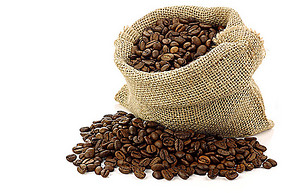
Amber coffee is a Chinese trademark of CubitaCoffee, Cuba.
Following caf é (Wechat official account vdailycom) found that the Beautiful Cafe opened a small shop of its own in 1748, coffee was introduced from Dominica to Cuba, and Cuba has been growing coffee ever since. The coffee bean selected by the Cuban Cubita is an Arabica variety grown in the Crystal Mountains of Cuba. It is produced and used by the farmers themselves, so it is considered to be of higher quality and better quality.
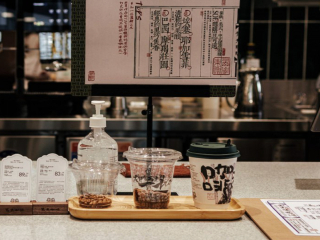
The development of Chinese coffee is not only dressed in the coat of Chinese elements.
In the past year, coffee shops with traditional Chinese style elements have sprung up like bamboo shoots after a spring rain. With the demand of the new generation of consumers for "national tide" and "local culture", in order to cater to the public, the style and coffee products of many cafes gradually coincide with the local representative food, food culture, traditional style and so on.
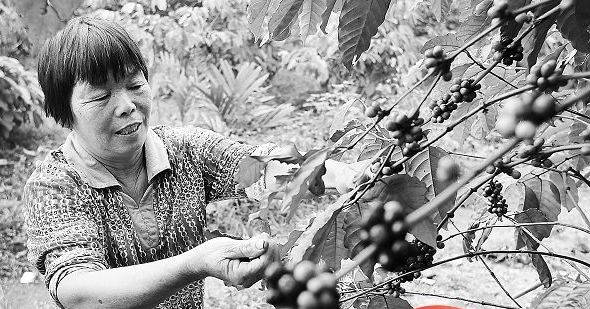
Coffee cold knowledge: Hainan coffee annual output of less than 200 tons, sales reached 6000 tons
Growers at Xinglong Overseas Chinese Farm are checking coffee growth. Reporter Su Xiaojie Photographed by our reporter Kuang Changxun Guo Jiaxuan Special reporter Chen Xunjing Correspondent Wang Zhezhi Fu Ji like a mountain, prosperous prosperity. In the past May Day holiday, Wanning Xing

Taiwanese businessmen build Chinese coffee brands in the old revolutionary base areas of the mainland
On a sunny afternoon after the rain, the Nankeng mountain depression along the southeast coast of Fujian was cloudy with green mountains and green waters. Huang Wenguang, a Taiwanese businessman in his late sixties, gathered with friends at his coffee sightseeing park. Viewed from the viewing terrace halfway up the hillside, 100 mu of coffee trees planted along the hillside are leafy and green; cups of coffee give off a delicate fragrance at hand. Not bitter, not sour, not astringent to come out of China

Chinese Coffee Market and the Price of Yunnan Coffee planting Coffee Tree Yunnan Coffee
By observing Crema, we can judge the freshness of coffee beans, the completeness of coffee extraction and the uniformity of coffee extraction. How to tell if the coffee beans are fresh: although you can tell that the beans are fresh when you observe a lot of foam, there is also a possibility that Robusta is high. So we can observe the state of foam precipitation instead. If they are very fresh beans

China coffee development history China coffee growing area China Yunnan coffee Yunnan coffee delicious
In terms of natural conditions, many areas of our country are very close to Latin America, South America, India, Indonesia and other places, and have innate conditions for coffee cultivation, but traditional culture and living customs restrict the development of coffee in China. Until recent years, with coffee more into the lives of ordinary Chinese people, with the impact of foreign culture and lifestyle, coffee cultivation only
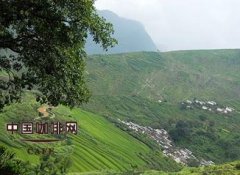
Chinese Coffee Culture the Legend of Coffee in Zhukula Village, Yunnan Province
When it comes to the history of Chinese coffee, we have to mention Yunnan Dali Zhukula Coffee, which plays a vital role in the history of Chinese coffee. The ancient coffee forest in Zhukula Village is a unique variety of small-grain coffee in Yunnan. It is very rare and of excellent quality. It can be called a living fossil of Chinese coffee. We went to explore the century-old coffee legend of Zhukula village. Zhu Kula, located in Yunnan Province

The potential of Coffee consumption in China Yunnan Coffee epitomizes the development of Chinese coffee
Professional coffee knowledge exchange more coffee bean information please follow coffee workshop (Wechat official account cafe_style) China Coffee Engineering Research Center Dr. Chen Zhenjia said that by the beginning of 2016, China's coffee planting area exceeded 1.8 million mu, with a total output of 140000 tons, accounting for 1.5% of the world's total output. More than 70 countries around the world produce coffee, producing more than 100000 tons of coffee.

How is the coffee market in China? That's what the foreign media said.
Communication of professional baristas Please pay attention to Coffee Workshop (Wechat official account cafe_style) Coffee started relatively late in China. In the early days, only high consumers or returnees were interested in going to the cafe for a drink, but with the passage of time, the domestic coffee market has undergone earth-shaking changes. As an important part of the world coffee market, China has attracted the attention of foreign media.

Ethiopian coffee powder introduction of Ethiopian coffee beans
Now, Ethiopia produces coffee not only for drinking, but also for coffee lovers around the world to enjoy it better. With the continuous improvement of the quality and production efficiency of the coffee industry, Ethiopia is now more than ever able to provide high-quality coffee to even the most picky and discriminating customers. Ethiopia hopes that not only the world

Introduction to Chinese Coffee: how is Yunnan Coffee in China? is Yunnan Coffee good?
Professional coffee knowledge exchange more coffee bean information please follow the coffee workshop (Wechat official account cafe_style) in the past, Yunnan coffee because of poor quality, mostly used to make instant, which also led to Yunnan coffee has not been very good reputation, but in recent years Yunnan coffee is like a dark horse, slowly appeared in the boutique coffee market. Yunnan coffee

How far is China from being a big coffee consumer?
In Fushan, a small town in the western corner of Hainan, fragrant cafes are full all the year round, and local residents consume more than 200 cups of coffee per capita each year. This astonishing consumption impressed coffee suppliers from all over the world who came here to participate in the International barista Championship. Chinese people began to be interested in coffee culture, which made me see the huge market potential. Ethiopian federal democracy

Starbucks stores in China are on the rise to surpass those of Japan
A number of executives, including the company's CEO, Howard Schultz (Howard Schultz), were interviewed by the Nippon Economic News (Chinese version: Nikkei Chinese website) a few days ago. Referring to the Chinese market, Schultz pointed out that the middle class is growing and the demand for goods and services with strong brand appeal is increasing. Among emerging market countries, Starbucks is especially in China.
Development of Chinese Coffee Market Chinese Coffee starts from Pu'er
What binds Jin Jihui, Alex and Hute to Yunnan is the thousand-year-old tea village Pu'er. This small border town, which has changed its name from Simao to Pu'er because of its famous Pu'er tea, now wants to add another label to its city card, the Coffee Capital of China. In 2007, Jin Jihui, a middle-aged literary and artistic classmate with Jia Jingwen and Xu Jinglei at the Beijing Film Academy, came to Yunnan

Jugula, the birthplace of Chinese coffee
Jugula, the secret place where Chinese coffee originated, is a distant place and a story that has been around for a long time. Zhu Kula Yi language meaning: tortuous mountain road. In the deep mountains in the west of Binchuan County, Yunnan Province, there is a little-known Yi shanzhai-Zhu Kula, which has existed quietly and full of vitality for hundreds of years in the deep gorge of Baizhang River, a tributary of the Jinsha River. So far
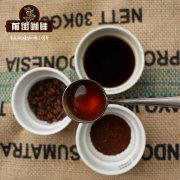
Chinese Fine Coffee Pu'er Manor of Fine Coffee beans in Yunnan, China
Professional coffee knowledge exchange more coffee bean information Please follow the coffee workshop (Wechat official account cafe_style) in 1892, when the French missionary successfully planted the first coffee tree in a place called Zhukula in order to meet his own coffee needs, he might not have thought that a hundred years later coffee would become a highlight of Yunnan plateau characteristic agriculture. Yunnan in the 1950s
Coffee Culture Common sense Chinese Coffee Culture
The history of the introduction of coffee into China is not long, and it was not until 1884 that coffee was first planted in Taiwan Province. In the mainland of the motherland, the earliest coffee cultivation began in Yunnan. At the beginning of the 20th century, French missionaries brought the first batch of coffee saplings to Binchuan County, Yunnan Province, and began to grow coffee in the mainland. In terms of natural conditions, many parts of our country and